Kava vs. Mocktails: Choosing an Alcohol-Free Drink
Kava or mocktails? Learn how these alcohol-free drinks differ in taste, ritual, effects, ingredients, social feel, and when to choose each one.
Mocktails and kava are often placed on the same shelf in people's minds: things you drink when you are not drinking.
That is fair, but it is also a little too simple.
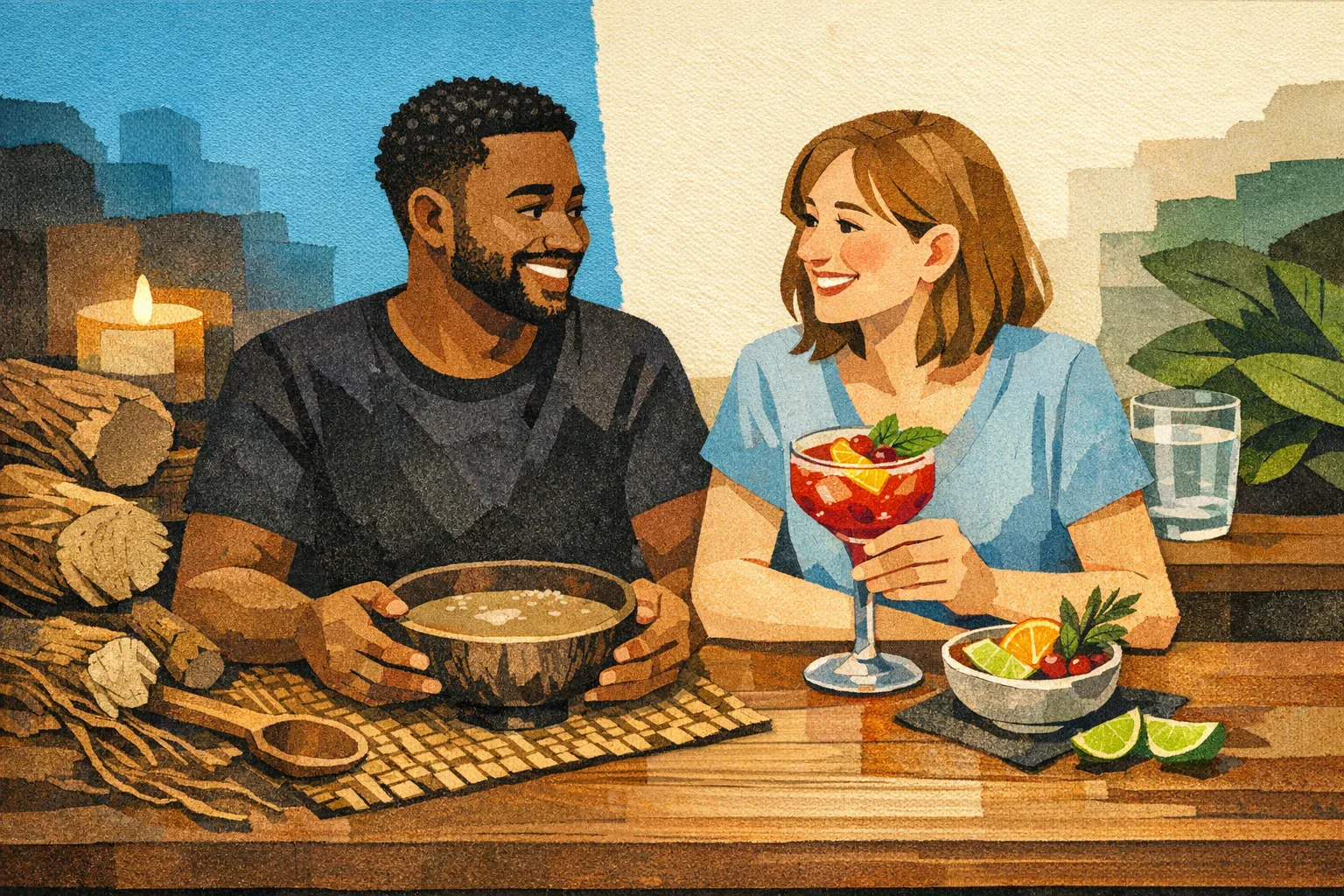
A mocktail is usually about the cocktail experience without alcohol: flavor, presentation, glassware, garnish, ritual. Kava is different. It is a traditional South Pacific root drink with its own history, taste, culture, and body feel. It is not pretending to be a margarita. It is doing something else.
Both can belong in an alcohol-free life. The trick is knowing what you are actually looking for.
The short version
Choose a mocktail when you want flavor, ceremony, and a cocktail-like experience without alcohol.
Choose kava when you want an alcohol-free drink that may help you feel relaxed, social, and grounded while staying clear-headed.
Choose both when you are at a good zero-proof spot, feeling curious, and have no interest in making beverage decisions into a personality test.
What is a mocktail?
A mocktail is a cocktail without alcohol. It may use juice, citrus, tea, herbs, spices, syrups, soda, bitters without alcohol, non-alcoholic spirits, shrubs, tonics, or whatever else the bar team is excited to balance in a glass.
At its best, a mocktail is not "juice in a fancy cup." It has structure:
- Sweetness
- Acidity
- Bitterness or spice
- Texture
- Aroma
- A garnish that is not just there for moral support
The point is craft. You get something festive and adult without ethanol.
What is kava?
Kava is made from the root of the kava plant, Piper methysticum, native to the South Pacific. Traditional kava is prepared by steeping or kneading ground root in water, then straining it into an earthy drink.
Kava contains compounds called kavalactones. People commonly describe the feeling as calm, relaxed, body-softening, and social, while still clear-headed. Kava is alcohol-free, but it is not simply flavored water. It is a botanical drink with effects, which is why pacing and context matter. For the longer beginner version, start with What Is Kava?.
At Kava Works, kava can show up in a few forms: traditional kava, kava soda, compact extract pours, and kava-based lounge drinks. You can see examples on the menu.
Taste: polished vs. earthy
Mocktails usually aim for delicious first.
They may be bright, citrusy, bitter, floral, smoky, spicy, creamy, or refreshing. A good mocktail is designed so the first sip makes sense immediately.
Traditional kava is not like that. It is earthy, peppery, mineral, and sometimes bitter. The first sip may surprise you. It can also make your lips or tongue feel a little numb, which is normal for kava.
That does not mean kava has to be difficult. Kava soda, flavored options, Nitro Tea, and smoother pours can make kava much more approachable. But traditional kava is still a root drink. It has roots in every sense.
Ritual: cocktail replacement vs. third-place culture
Mocktails often borrow the ritual of cocktail culture. You order at a restaurant or bar. The drink arrives in beautiful glassware. You hold it while everyone else drinks. It helps you participate without alcohol.
Kava has a different ritual. It is more communal, more relaxed, and more lounge-oriented. At a kava bar, people are not usually trying to recreate a cocktail party. They are gathering around a different kind of drink with a different tempo.
That is why kava bars can feel like third places: not home, not work, not a traditional bar. Just somewhere to be.
Effects: flavor only vs. something you may feel
This is the biggest difference.
Most mocktails do not create a noticeable relaxing effect unless they include caffeine, adaptogens, nootropics, botanicals, or other functional ingredients. A mocktail can still change your mood because it is delicious, festive, and social. But the drink itself is usually about taste and ritual.
Kava is different. Many guests drink kava because they can feel it. They may feel calmer, more socially open, or more physically relaxed. The effect varies by person, serving, product, and pace.
That is also why kava requires more care. Start slow. Do not mix it with alcohol or sedating substances. If you take medications or have health concerns, talk with a healthcare provider first.
Social feel: blending in vs. opting into a new scene
Mocktails are great when you want to blend into a regular restaurant or bar setting. You can hold a drink that looks like everyone else's, avoid questions, and enjoy the night.
Kava is better when you want the whole room to support the alcohol-free choice. At a kava lounge, nobody thinks it is strange that you are not drinking alcohol. That is the baseline. The social pressure is lower because the menu already agrees with you.
This makes kava bars useful for sober-curious people, designated drivers, students, athletes, people taking a break, and anyone who wants a night out without negotiating with a cocktail list.
Price: why both can cost more than expected
People sometimes ask why mocktails or kava drinks cost real money if there is no alcohol.
The answer is that alcohol is not the only cost in a drink. You are paying for ingredients, labor, space, glassware, prep, service, consistency, rent, staff knowledge, and the experience of having somewhere good to go.
A thoughtful mocktail may involve expensive non-alcoholic spirits, fresh juice, syrups, bitters, garnishes, and prep time.
A kava drink involves sourcing quality kava, preparation, consistency, serving knowledge, and a space built around the drink.
You are not just buying "not alcohol." You are buying the thing itself.
Which is better for a date?
It depends on the date.
Choose mocktails if you are at dinner and want something elegant with the meal.
Choose kava if you want the date to feel more casual, interactive, and a little different. Kava gives you something to talk about. It also creates a relaxed setting where you can sit longer without the night turning into a drinking session.
For a first date, kava soda is a friendly pick. It is bright, easy, and not too serious. For a curious date, split a traditional kava and a flavored drink so you can compare.
Which is better if you are sober?
This is personal.
Many sober people enjoy mocktails. Some avoid mocktails that imitate alcoholic drinks because they can feel triggering. Some sober people enjoy kava bars. Others avoid any mood-altering botanical drink. None of these choices are wrong.
If you are in recovery, listen to your own boundaries first. The best alcohol-free drink is the one that supports your life, not the one a trend says you should try.
If you are planning for someone else, ask gently:
"Are you comfortable with mocktails or kava, or would you rather do coffee, tea, or dessert?"
That is hospitality.
Which is better after work?
If you want flavor with dinner, mocktail.
If you want your body to unclench a little and you want somewhere to sit, kava.
This is where kava has an edge. The after-work need is often not "I want a fancy drink." It is "I need a transition between the day and the rest of my life." Kava lounges are built for that transition.
Which is better for Colorado Springs?
Honestly, both.
Colorado Springs has an outdoorsy, wellness-minded, military-adjacent, student-filled, sober-curious mix of people. Some want a beautiful mocktail at dinner. Some want an 18+ alcohol-free hangout. Some want a place to go after climbing, class, work, trivia, or a downtown show.
The city is better with more options.
Mocktails make regular restaurants more inclusive. Kava bars create whole alcohol-free communities.
Those are different jobs, and both matter.
What to order at Kava Works if you like mocktails
If mocktails are your usual alcohol-free drink, start with the friendlier side of kava:
Kava soda if you like bright, sparkling drinks. Nitro Tea if you like smooth, cold sippers. PBJ if you want something familiar and playful. Traditional kava if you are ready for the rooty classic.
Tell the kavatender what flavors you usually like. Citrus, sweet, smooth, not-too-sweet, earthy, creamy, light, bold. That language helps. If you are planning a local night out, pair this with Best Non-Alcoholic Drinks in Colorado Springs.
A quick safety note
Kava is alcohol-free, but it can have effects. Start slow. Do not mix kava with alcohol or other substances that cause drowsiness. The National Center for Complementary and Integrative Health advises talking with a healthcare provider before using kava if you take medication and warns of special risks during pregnancy and breastfeeding.
Kava Works requires guests to be 18 or older to order kava.
The best drink is the one that fits the moment
Mocktails are wonderful when you want flavor, elegance, and the social rhythm of cocktails without alcohol.
Kava is wonderful when you want a relaxed, alcohol-free place to gather and a drink you may actually feel.
You do not have to choose a team. You can have a mocktail with dinner, then kava after. You can drink kava on Friday and a zero-proof spritz on Saturday. You can skip both and get tea.
Alcohol-free drinking is not about having fewer options.
It is about finally having better ones.