
Kava vs. Kratom: Key Differences, Effects & Safety
Kava vs. kratom, they're often confused but they're very different plants. Compare their effects, safety, legality, and which is which, in one clear guide.
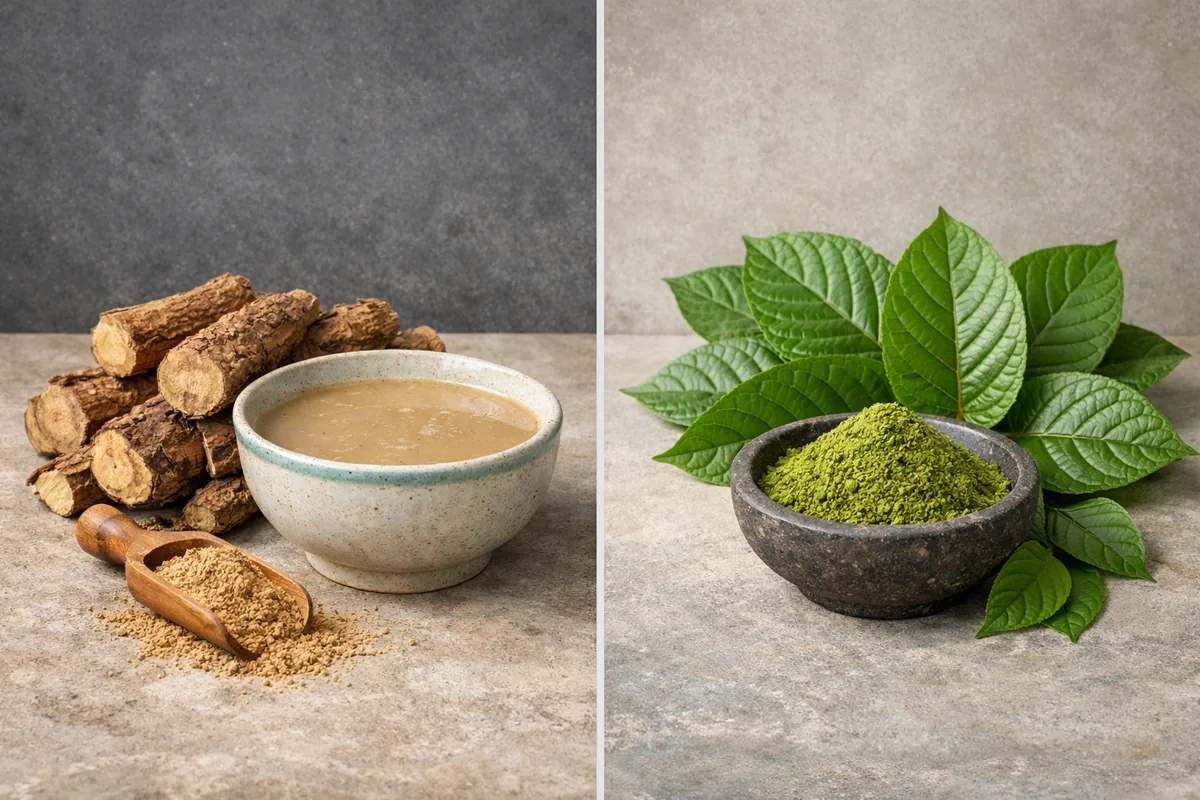
Kava and kratom are two completely different plants that often get lumped together because both are sold in some of the same shops. Kava (Piper methysticum) is a South Pacific pepper relative that promotes calm, clear-headed relaxation and is legal nationwide, including in Colorado. Kratom (Mitragyna speciosa) is a Southeast Asian tree in the coffee family that can be stimulating at low doses and sedating at higher ones, carries a higher risk of dependence, and faces a patchwork of state and local laws. They are not the same, they do not feel the same, and they are not regulated the same. If you want a relaxing, social, alcohol-free drink with a long traditional track record, kava is the focused choice, and it is what we serve.
They're often confused, here's why they're different
Because kava and kratom are both botanicals sometimes sold side by side, people assume they are interchangeable. They are not:
- Kava comes from the root of a Pacific Island pepper plant. It has been used ceremonially for over 3,000 years to relax and bring communities together. See what is kava.
- Kratom comes from the leaves of a Southeast Asian tree related to coffee. Its active compounds interact with the body very differently than kava's kavalactones.
Different plant, different part, different chemistry, different effects, different legal status. The only real thing they share is being plant-based and alcohol-free.
How the effects differ
- Kava produces a consistent, calming, clear-headed relaxation: eased tension, easier conversation, a mild sense of well-being, while you stay lucid and in control. It is predictable and social, which is why it anchors the kava-bar experience. More in our guide to kava effects and benefits.
- Kratom is dose-dependent and more complex. Smaller amounts can feel stimulating and energizing, while larger amounts can feel sedating. Its effects and risk profile differ meaningfully from kava's, and it requires more caution.
If your goal is a relaxed, social night out without alcohol, kava is the more straightforward, lower-risk fit.
Safety: an honest comparison
- Kava is generally well tolerated by healthy adults in moderation, with mild, temporary side effects like lip numbing, drowsiness, and occasional stomach upset. It is not physically addictive like opioids, and the main cautions are around liver health, heavy overuse, and never mixing with alcohol. See our full guide on whether kava is safe.
- Kratom carries a higher potential for dependence, and some users report withdrawal. It has drawn more regulatory scrutiny and health-authority caution. If you choose to use kratom, research it carefully, understand your local laws, and consult a healthcare provider.
This is not about declaring one "bad." They sit in different risk categories, and they should not be treated as the same thing. Neither should be combined with alcohol.
Legality: also different
- Kava is legal at the federal level and across Colorado, with no statewide ban. See whether kava is legal in Colorado.
- Kratom is legal federally but faces a patchwork. Some states restrict or ban it, and some Colorado municipalities have their own kratom rules, such as age limits. Always check local regulations for kratom specifically.
Can you take kava and kratom together?
We do not recommend casually combining botanicals. They affect the body differently, the interaction is not something to experiment with, and you should never stack relaxing substances without understanding the risks, and never with alcohol. If you are curious about combining anything, talk to a healthcare professional first. At a kava-focused lounge, the simplest, safest path is to enjoy kava on its own.
Where Kava Works stands
We are a kava-first lounge. We built Kava Works around the calm, social, clear-headed, alcohol-free experience that kava delivers, the kind of place you can bring a date, a group of friends, or just yourself after a long day, and feel great the next morning. If kava is what you are looking for, you are in exactly the right place. Visit us North or Downtown, and start with what is kava or kava for beginners.
This article is general educational information, not medical advice. Consult a healthcare provider with questions about any botanical, and check current local laws.
Frequently asked questions
Is kava the same as kratom?
No. Kava and kratom are completely different plants. Kava comes from the root of a South Pacific pepper plant and promotes calm, clear-headed relaxation. Kratom comes from the leaves of a Southeast Asian tree in the coffee family and has different, dose-dependent effects and a higher dependence risk.
What's the difference between kava and kratom effects?
Kava produces a consistent, calming, social, clear-headed relaxation. Kratom is dose-dependent, stimulating at low doses and sedating at higher doses, and carries more risk, so it requires more caution.
Is kratom legal in Colorado?
Kratom is legal federally but regulated as a patchwork, and some Colorado cities and counties have their own rules, such as age restrictions. Kava, by contrast, is legal statewide in Colorado with no ban. Check local regulations for kratom specifically.
Which is safer, kava or kratom?
For most healthy adults using it responsibly and in moderation, kava is generally well tolerated and is not physically addictive like opioids. Kratom carries a higher potential for dependence and more regulatory scrutiny. Neither should be mixed with alcohol; consult a healthcare provider with concerns.